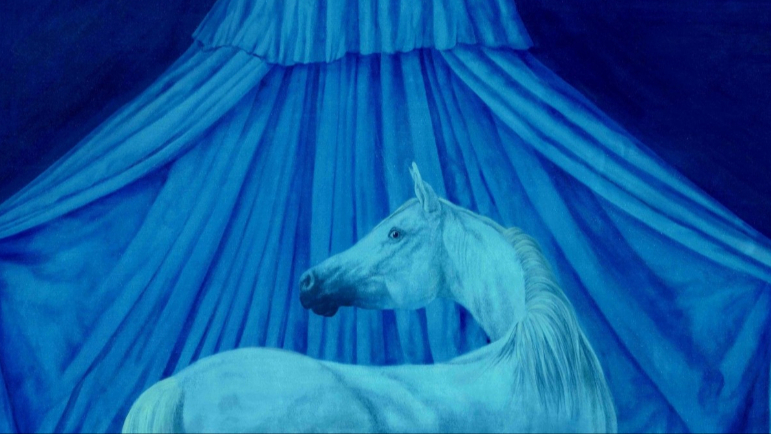
Xu Lei
Introduction
Xu Lei is an esteemed Chinese contemporary artist, born in 1963 in Nantong, Jiangsu province. He is well-known for his unique blend of traditional Chinese ink painting techniques with elements of Western surrealism, creating a distinctive style that has captured both national and international audiences. Xu serves as the Art Director of the Today Art Museum in Beijing and is also affiliated with the China Academy of Art in Hangzhou. His works are celebrated for their intricate detail and thematic depth, often exploring themes of isolation and the interplay of classical and modern aesthetics.
Early Life and Education
Xu Lei's artistic journey began in Nantong, Jiangsu, where he was born in 1963. His early life in this culturally rich region likely influenced his later work, which often melds traditional Chinese artistic principles with contemporary innovations. Xu pursued formal education in the arts at the Nanjing Arts Institute, where he specialized in ink painting. This educational background provided him with a solid foundation in the classic fine-line (gongbi) style, characterized by detailed and elaborate brushwork. Xu’s education was instrumental in shaping his artistic style, as he honed his skills in the techniques of traditional Chinese painting while also being exposed to modern artistic movements.
Career
Xu Lei's career is marked by his active participation in China's New Wave art movement in the 1980s, a pivotal period that saw many Chinese artists embracing new forms of expression and integrating Western influences into their work. During this time, Xu was particularly inspired by Western artists such as Yves Klein, Marcel Duchamp, and René Magritte, whose surrealist methodologies resonated with his artistic vision. Xu's career trajectory also includes his role as a professional painter with the Jiangsu Institute of Chinese Painting, where he continued to refine his craft.
Artistic Style and Themes
Xu Lei's artistic style is a sophisticated confluence of traditional Chinese elements and Western surrealism. His works are characterized by the use of ink brush and rice paper, traditional materials that he manipulates with exquisite skill. A hallmark of his style is the use of curtains to divide space, reminiscent of a theatrical stage, and objects such as Ming dynasty furniture, birds, high-heeled shoes, cages, and folding screens, which imbue his paintings with both unpredictability and harmony. Themes of isolation and loneliness permeate his work, often conveyed through the absence of human figures, which evokes a haunting reflection on the individual's place in the contemporary world. Xu's paintings are a testament to his mastery of blending the old with the new, offering viewers a unique perspective on modernity through a classical lens.
Major Exhibitions
Xu Lei's art has been showcased in numerous prestigious exhibitions both in China and internationally. Notable venues include the National Art Museum of China, Guggenheim Museums in New York, Irish Museum of Modern Art, and the Hong Kong Arts Centre. His participation in the 1998 exhibition A Century in Crisis: Modernity and Tradition in the Art of Twentieth-Century China at the Guggenheim Museum in New York was a significant highlight, as it underscored his role in bridging traditional Chinese art with global contemporary movements. His work has also been displayed at the Shanghai Art Museum, the Nanjing Art Institute, and the Today Art Museum, allowing audiences across the globe to experience his unique artistic vision.
Notable Works
Xu Lei's oeuvre includes several notable works that exemplify his distinctive style and thematic exploration. Day in Night (2011) is particularly emblematic, depicting a horse juxtaposed against an elaborate curtain backdrop. This piece highlights Xu's ability to merge classical Chinese painting techniques with surrealistic influences, creating a dialogue between tradition and innovation. His works often feature converse imagery, such as the interplay between two half-horses, symbolizing the tension between static and dynamic forms, and the merging of Eastern and Western aesthetic principles. Through such works, Xu challenges viewers to consider the independent thought processes of images and their ability to transcend mere visual representation, inviting contemplation on deeper philosophical and cultural narratives.
Awards and Recognition
Xu Lei's contributions to the art world have earned him significant recognition and acclaim. His works are part of prestigious collections, including the National Palace Museum, Shanghai Art Museum, Jiangsu Provincial Art Museum, Suzhou Museum, and Hong Kong M+ Art Museum. His international acclaim is further evidenced by having one of his artworks selected by Chateau Mouton Rothschild for its vintage 2008 label, a testament to his global influence and the universal appeal of his art. Xu's recognition extends beyond exhibitions and collections, as he serves as the vice president of the Chinese Hue Art Association and works at the Creation Research Centre of the China Art Academy, underscoring his pivotal role in shaping contemporary Chinese art and nurturing the next generation of artists.








